
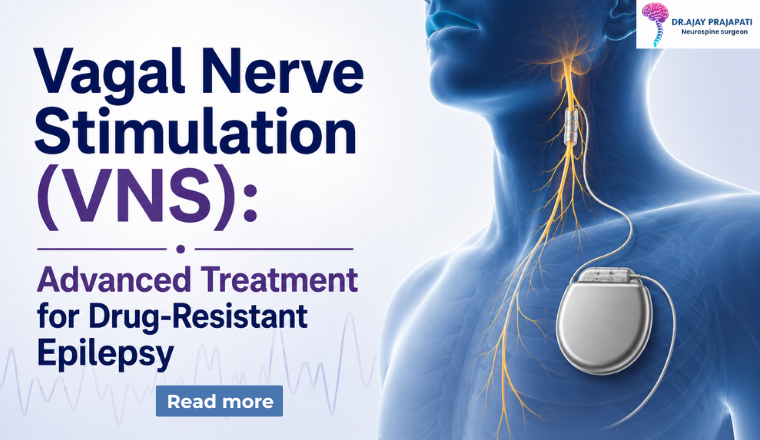
Vagal Nerve Stimulation (VNS): Advanced Treatment for Drug-Resistant Epilepsy
For most people with epilepsy, medication brings seizures under control. But for nearly one in three patients, seizures keep happening despite trying multiple drugs. This is called drug-resistant epilepsy, and it can be an exhausting, unpredictable way to live — never quite knowing when the next seizure will strike, or what it might cost you: a driving license, a job, a sense of independence.
If this sounds familiar, either for yourself or someone you love, there's a treatment worth knowing about: Vagal Nerve Stimulation, or VNS. It isn't a cure, but for many patients, it's a genuine turning point.
What Is Vagal Nerve Stimulation?
VNS is a therapy that uses a small device, similar to a pacemaker, implanted just under the skin near the collarbone. A thin wire connects it to the vagus nerve in the neck — one of the body's longest nerves, running from the brainstem down through the chest and abdomen.
The device sends mild, regular electrical pulses along this nerve up to the brain. These pulses help calm down the abnormal electrical activity that triggers seizures. Think of it less like "fixing" the brain and more like gently interrupting the storm before it builds momentum.
Who Is VNS For?
VNS is typically recommended for people who:
Have tried two or more anti-seizure medications without adequate control
Are not good candidates for resective brain surgery, or have had surgery that didn't fully stop seizures
Experience frequent, disabling seizures affecting daily life, work, or safety
Want to reduce seizure frequency and severity, even if medications remain part of the plan
It's worth noting that VNS is often considered only after a thorough evaluation by a specialist. This is why patients navigating this decision usually consult the Best brain and spine specialist in Noida. who can confirm whether medications have truly been exhausted and whether VNS — rather than another surgical option — is the right next step.
How the Procedure Works
The implantation itself is a relatively short outpatient or overnight surgical procedure, usually under general anesthesia. A small incision is made near the collarbone to place the pulse generator, and a second small incision in the neck allows the wire to be wrapped around the vagus nerve.
Once implanted, the device is programmed externally using a handheld wand — no further surgery is needed to adjust settings. Stimulation typically runs in cycles: a short burst of stimulation followed by a longer rest period, repeating continuously, day and night.
Many patients are also given a small magnet. Swiping it over the device can trigger extra stimulation the moment they feel a seizure coming on — giving them, for the first time, a sense of control over something that always felt entirely unpredictable.
What Results Can You Expect?
VNS isn't an overnight fix. Most patients notice gradual improvement over months, not days, as the settings are fine-tuned. On average:
Many patients experience a meaningful reduction in seizure frequency within the first year
Seizures that do occur are often shorter or less severe
Some patients report improved alertness, mood, and quality of life independent of seizure control
Benefits tend to increase over the first two to three years of use
It's important to have realistic expectations — most patients still take some medication alongside VNS. The goal is fewer, milder seizures and a better quality of life, not necessarily complete seizure freedom.
Is VNS Safe?
VNS has been used for epilepsy for decades and has a well-established safety profile. Common side effects are usually mild and tend to occur during active stimulation — a temporary hoarseness, tingling, or slight cough. These often lessen over time as the body adjusts.
Serious complications are rare, but as with any implanted device, infection or lead-related issues are possible. This is exactly why long-term follow-up with the Best brain and spine specialist in Noida matters — regular check-ins allow stimulation settings to be adjusted as your body responds, keeping side effects minimal while maximizing benefit.
Living With VNS
One thing many patients appreciate about VNS is how little it changes daily life. The device runs quietly in the background, batteries typically last several years before a simple replacement procedure, and there are no dietary restrictions or major lifestyle changes required.
That said, epilepsy rarely exists in isolation — nerve-related symptoms, headaches, or changes in sensation sometimes accompany seizure disorders. For patients managing these overlapping concerns, seeking the Best Nerve Treatment in Noida. alongside VNS follow-up ensures that both the seizure disorder and any related nerve symptoms are being addressed together, not treated as separate problems.
Why the Right Specialist Matters
Drug-resistant epilepsy is complex, and VNS is just one of several advanced options, alongside responsive neurostimulation and resective surgery. Getting an accurate picture of which treatment fits your specific seizure pattern requires detailed imaging, EEG monitoring, and an experienced eye. This is precisely the kind of nuanced decision-making that the Best brain and spine specialist in Noida. is trained to guide patients through, weighing surgical risk against expected benefit honestly and clearly.
If nerve-related symptoms are part of the picture too — tingling, numbness, or unexplained pain alongside seizures — pairing your epilepsy care with the Best Nerve Treatment in Noida. ensures nothing gets overlooked.
The Bottom Line
Living with seizures that don't respond to medication can feel isolating, but VNS has genuinely changed outcomes for thousands of patients worldwide. It offers a meaningful reduction in seizure burden with a strong safety record and minimal daily disruption. If you or a loved one has been cycling through medications without relief, it's worth having an honest conversation with the Best brain and spine specialist in Noida. about whether VNS could be your next step forward.
FAQs
1. Is VNS a cure for epilepsy?
No, it reduces seizure frequency and severity but usually doesn't eliminate seizures.
2. How long does the VNS device last?
The battery typically lasts several years before a simple replacement is needed.
3. Does VNS require ongoing medication?
Yes, most patients continue some anti-seizure medication alongside VNS.
4. Is the VNS surgery risky?
It's a low-risk, well-established procedure with decades of safety data.
5. How soon will I see results after VNS?
Improvement is usually gradual, often becoming noticeable over several months.